Add your promotional text...
Ephesians 6:10-18: Spiritual Warfare Insights
Understand spiritual warfare and how to stand firm in God's strength. Learn practical steps in Ephesians 6:10-18 on how to expose the enemy's tactics for daily victory in your life.
12/10/20255 min temps de lecture
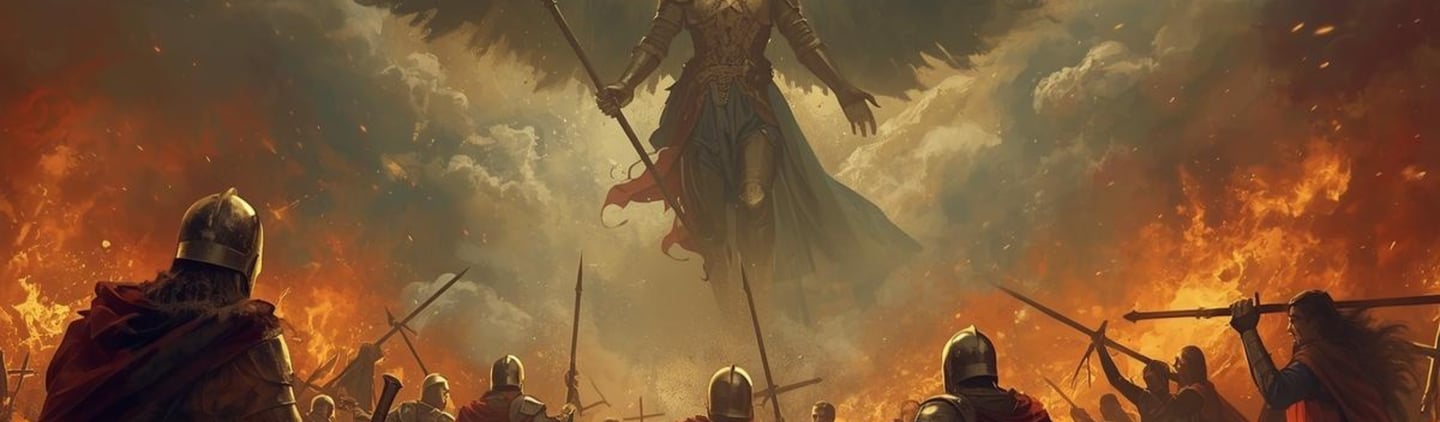

Ephesians 6:10–18
For our struggles is not against Flesh and Blood...
The Invisible War
When you accepted Jesus Christ, you gained an inheritance of eternal life, and you also enlisted in an invisible, yet intensely real, conflict: spiritual warfare. This is not a battle against flesh and blood—against people, politics, or circumstances—but against the spiritual forces of darkness that seek to steal, kill, and destroy.
Understanding spiritual warfare is not about living in fear; it is about living in awareness. It means recognizing that the struggles we face—temptation, doubt, division, despair—often have a spiritual root. As followers of Christ, we are called not just to defend, but to conquer. Our victory is assured, but it requires preparation, vigilance, and reliance on God’s power.
Understanding the Battleground
Spiritual warfare is the ongoing conflict between God’s kingdom and the forces of Satan. Our primary enemy, the devil, is a liar and a deceiver (John 8:44) whose goal is to blind believers to the truth and render them ineffective for God's purposes.
The Apostle Paul makes the battle lines clear: “For our struggle is not against flesh and blood, but against the rulers, against the authorities, against the powers of this dark world and against the spiritual forces of evil in the heavenly realms” (Ephesians 6:12, NIV).
The enemy uses various strategies, often masquerading as benign thoughts, reasonable doubts, or simple fatigue:
Deception: Distorting God’s character or promises (e.g., whispering, "Did God really say...?" or "God could never forgive that.").
Discouragement: Using past failures or current trials to crush hope and productivity.
Division: Sowing discord in the Church, families, and relationships.
Distraction: Drawing focus away from prayer, the Word, and service.
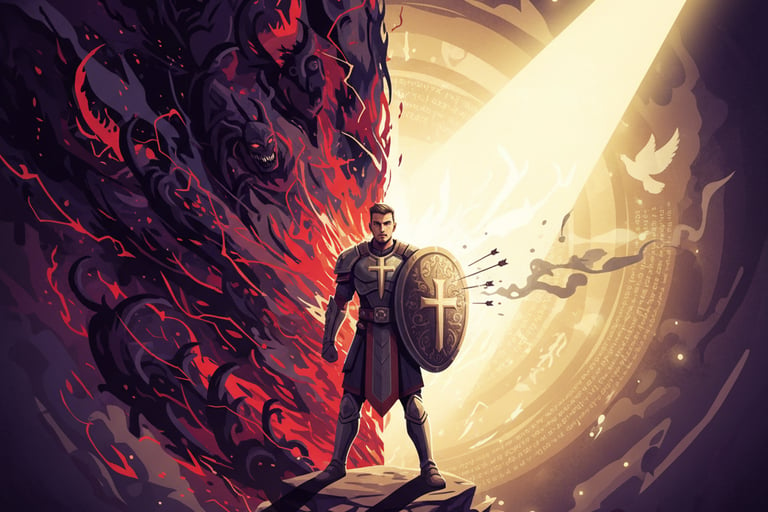
How to Protect Oneself: Putting on the Full Armor of God
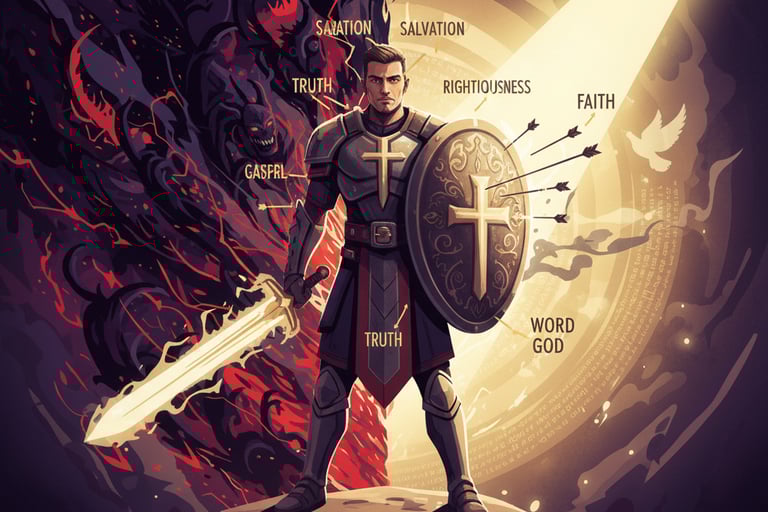
Our protection is not found in human strength, psychological tricks, or lucky charms. Our defense is divine, provided entirely by God, and described in detail in Ephesians 6:13-17. Protection in spiritual warfare means actively and consistently "putting on" the complete Armor of God.
The Belt of Truth
The foundation of the entire armor. The enemy is the father of lies, so we must be grounded in the truth of God’s Word (the Bible) and the truth of Christ (John 14:6).
Application: Commit to honest living and reject all forms of deception, both internal and external.
2. The Breastplate of Righteousness
This guards your heart, the center of your will and emotions. We rely on the imputed righteousness of Christ (which secures our standing before God) and strive for practical righteousness (daily moral purity).
Application: Make choices that align with God’s standards. Repent quickly when you sin, relying on Christ’s cleansing blood, not your own merits.
3. Shoes of the Gospel of Peace
Our feet must be ready to walk the path of the Gospel. This gives us confidence and stability because we are assured of our salvation and are actively sharing that hope with others.
Application: Find stability in the finished work of Christ. When doubt attacks, preach the Gospel to yourself. Be quick to reconcile and maintain peace.
4. The Shield of Faith
This is a defensive weapon capable of extinguishing "all the flaming darts of the evil one." Faith is our confidence in God’s character and promises.
Application: When temptation or fear arises, identify the dart (the lie) and raise the shield (the truth). For instance, when tempted by worry, declare God's promise: "My God will supply all your needs" (Philippians 4:19).
5. The Helmet of Salvation
This guards your mind and your thought life. It is the assurance of your eternal security in Christ. The enemy constantly attacks the mind with thoughts of worthlessness, fear, and hopelessness.
Application: Meditate on the finished work of Christ. Refuse to entertain thoughts that contradict your identity as a redeemed, chosen, and beloved child of God.
6. The Sword of the Spirit, which is the Word of God (Offense)
While the first five pieces are defensive, the Sword is the only offensive weapon provided. This is how Christ fought the enemy in the wilderness: by quoting scripture (Matthew 4:1-11).
Application: Memorize scripture that addresses common areas of struggle (fear, lust, pride). When attacked, speak the Word aloud.
7. Prayer (The Communication System)
Though not explicitly a piece of armor, Paul concludes the list by commanding us to "pray in the Spirit on all occasions with all kinds of prayers and requests." Prayer is the continuous flow of communication, power, and strategy from the Commanding General (God) to the soldier (us).
Application: Maintain a disciplined, vibrant prayer life, covering yourself, your family, your church, and your authorities.
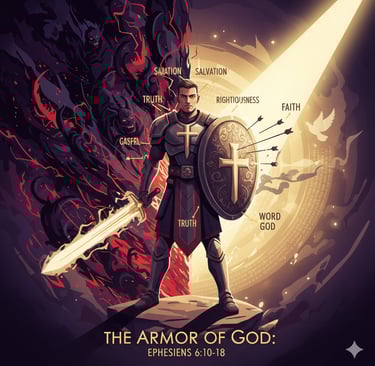
Standing Firm Through God’s Word
The final and most crucial element of spiritual warfare is the active use of God's Word—the Sword of the Spirit. This is how we move from simply being protected to actively standing our ground and reclaiming territory.
1. Know It, Speak It, Live It
The Word of God is living and active (Hebrews 4:12). It is not a suggestion; it is the absolute truth that dismantles the enemy's lies. To stand firm, you must:
Know It: Dedicate time daily to reading and studying the Bible.
Speak It: When confronted with a temptation, don't just think about resisting; speak the corresponding scripture aloud, just as Jesus did. For example, if tempted by greed, declare, “The love of money is a root of all kinds of evil” (1 Timothy 6:10).
Live It: Obedience is a powerful weapon. Unconfessed sin gives the enemy a foothold (Ephesians 4:27). Standing firm means actively walking in purity and integrity.
2. The Power of Worship and Community
Spiritual battles are exhausting, and no soldier fights alone.
Worship: Authentic worship shifts your focus from the battle to the Bountiful King. Praise and thanksgiving are weapons that confuse and repel the enemy (Psalm 22:3).
Community: The Church is your squadron. “Two are better than one... if either of them falls down, one can help the other up” (Ecclesiastes 4:9-10). Seek accountability, prayer partners, and spiritual mentorship. The enemy always tries to isolate a believer before attacking. Standing firm often means simply staying connected.
3. Vigilance and Persistence
Spiritual warfare is not a one-time event; it is a lifestyle of vigilance. We must be “alert and of sober mind” because “your enemy the devil prowls around like a roaring lion looking for someone to devour” (1 Peter 5:8). Standing firm requires persistence. You may feel weary, but remember the battle belongs to the Lord, and Christ has already secured the victory (Colossians 2:15).
Conclusion
The good news is that you do not fight this war in your own strength. When you are clothed in the Armor of God, protected by faith, and wielding the Sword of the Spirit, you are more than a match for any spiritual foe. Remember the promise of the Commander: “Submit yourselves, then, to God. Resist the devil, and he will flee from you” (James 4:7).
Stand tall, believer. Put on your armor daily, pray without ceasing, and speak the truth of God’s Word. In Christ, your victory is certain.