Add your promotional text...
True Meaning of Fasting During Carême
Discover the true meaning of fasting during Carême (Lent). This post explores how this sacred season fosters internal transformation, mental clarity, and profound renewal, going beyond mere sacrifice.
3/1/20264 min temps de lecture
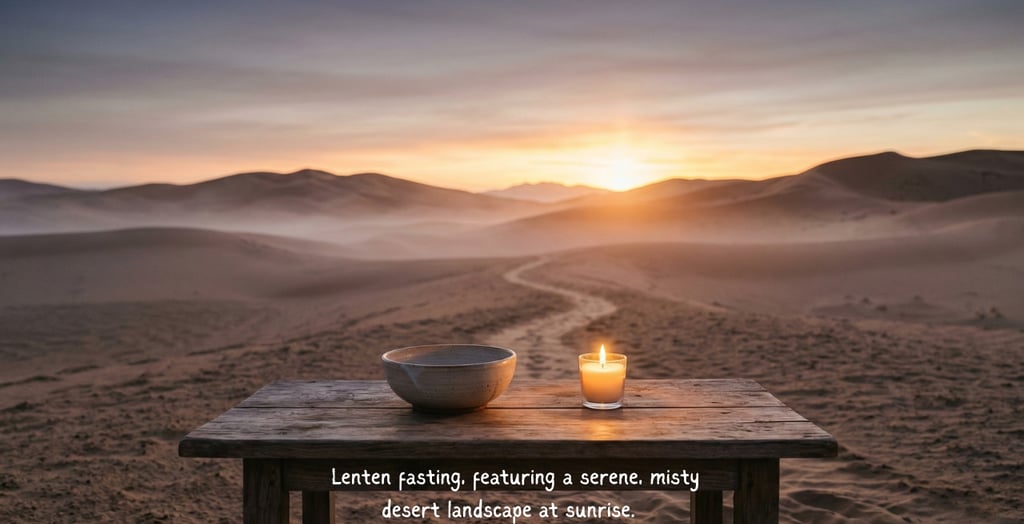
As the ashes of Mercredi des Cendres (Ash Wednesday) fade from our foreheads, a collective shift occurs in the hearts of millions. We enter Carême—the forty-day season of Lent. For many, the first question that arises isn’t "How will I pray?" but rather, "What am I giving up?"
We talk about chocolate, social media, or caffeine. We count down the days until the Sunday reprieve or the final celebration of Easter. But if we view fasting merely as a test of willpower or a late-winter diet, we miss the heartbeat of the season. To understand the true meaning of fasting during Carême, we must look past the empty plate and into the hungry soul.
The Desert Experience: Mirroring the Forty Days
The tradition of Carême is rooted in the biblical narrative of Jesus retreating into the desert for forty days. In the desert, there are no distractions. There is no comfort. There is only the self, the elements, and the Divine.
When we fast, we create a "mini-desert" in our modern lives. By stripping away the luxuries and habits that usually dull our senses, we force ourselves to confront the things we usually avoid: our fears, our dependencies, and our restlessness. The true meaning of fasting is emptiness. Not an emptiness that leads to despair, but a hollow space that allows something greater to enter.
Fasting as a Tool for "Metanoia"
In the Christian tradition, the goal of Carême is metanoia—a Greek word meaning a transformative change of heart. Fasting is the physical catalyst for this spiritual shift.
Most of our lives are spent in a state of consumption. We consume food, media, opinions, and material goods to feel "full." However, this fullness is often a mask for spiritual malnutrition. When we intentionally choose to go without, we break the cycle of automatic consumption. We realize that we are not defined by our cravings.
Fasting during Carême is an act of reclaiming our freedom. It is a reminder that while we live in the world, we are not enslaved by our biological impulses or societal expectations.
The Three Pillars: Why Fasting Never Stands Alone
In the liturgical tradition, fasting is never an isolated act. It is part of a triad: Prayer, Fasting, and Almsgiving.
Fasting thins the veil between us and the spiritual world. It makes us "light" and alert.
Prayer fills the space that fasting creates. Without prayer, fasting is just a hunger strike.
Almsgiving ensures our fasting isn't selfish. The money or time saved by giving something up should directly benefit someone in need.
If you give up meat but remain unkind to your neighbor, the fast has failed its primary purpose. The true meaning of the fast is to soften the heart, making it more pliable and compassionate.
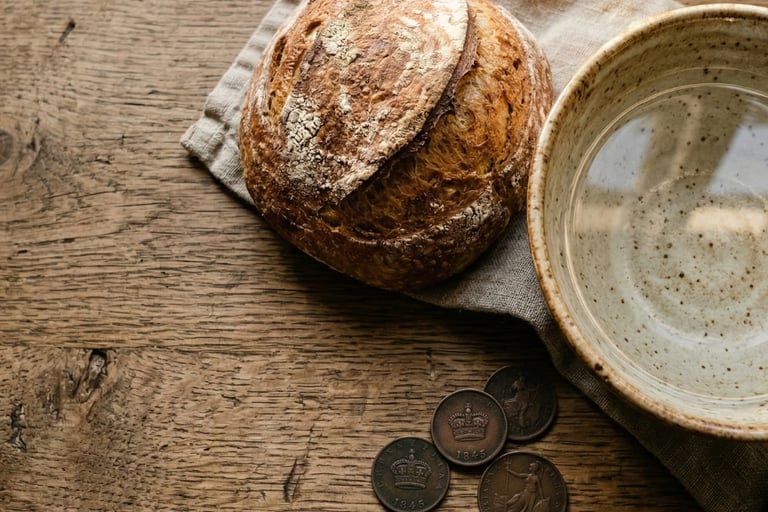
Moving Beyond "Giving Up" to "Taking Up"
While the "subtractive" side of fasting is important, the modern understanding of Carême has evolved to include "additive" fasting. This means fasting from behaviors that poison our relationships and our peace of mind.
Consider these deeper fasts:
Fasting from Judgment: Instead of giving up sugar, try giving up the habit of criticizing others.
Fasting from Noise: Intentionally seeking ten minutes of absolute silence each day to listen for the "still, small voice."
Fasting from Anxiety: Consciously surrendering worries and practicing radical trust.
These forms of fasting are often much harder than skipping a meal, but they strike at the very root of our spiritual blockages.
The Physicality of Faith
We are not just spirits; we are embodied beings. The physical pang of hunger during a fast is a powerful teacher. It serves as a "memento mori"—a reminder of our frailty and our dependence on things outside ourselves.
In a culture that prioritizes instant gratification, the physical discomfort of fasting is counter-cultural. It teaches us patience. It teaches us that "man does not live by bread alone." Every time our stomach rumbles or we crave that thing we’ve renounced, it serves as a bell of mindfulness, calling us back to our intention for the season.
Solidarity with the Suffering
Finally, the true meaning of fasting during Carême is found in solidarity. Throughout history and across the globe, hunger is not a choice for millions; it is a daily reality.
When we fast, we voluntarily step into the shoes of the poor. We experience, in a very small way, the vulnerability that comes with lack. This should stir in us a "holy restlessness"—a desire to work for a world where no one is forced to fast against their will. Our voluntary hunger should sharpen our appetite for justice.
Conclusion: The Feast at the End of the Fast
Carême is not a season of gloom, even if its practices are somber. It is a season of preparation for the greatest feast of all: the Resurrection.
The fast makes the feast possible. We cannot truly appreciate the joy of the empty tomb if we haven't first sat in the silence of the tomb. We cannot taste the sweetness of the Paschal celebration if our palates are already saturated with the mundane.
This year, as you navigate your fast, don’t count the days. Make the days count. Look at the empty space in your life not as a void, but as an altar. The true meaning of fasting during Carême is to become a person who is "hungry for God," and in that hunger, to find a life that is truly full.
If this reflection has touched your heart,
visit our Contact Page and leave a message
https://www.dailybreadline.com/christian-contact-pa