Add your promotional text...
When the Heavens Feel Like Brass.
You are praying, but the words seem to bounce off the ceiling. You are reading, but the pages feel empty. If you feel spiritually numb right now, you are not alone—and you are not abandoned. The Heavens are not silent.
"REAL TALK" & VULNERABILITY.
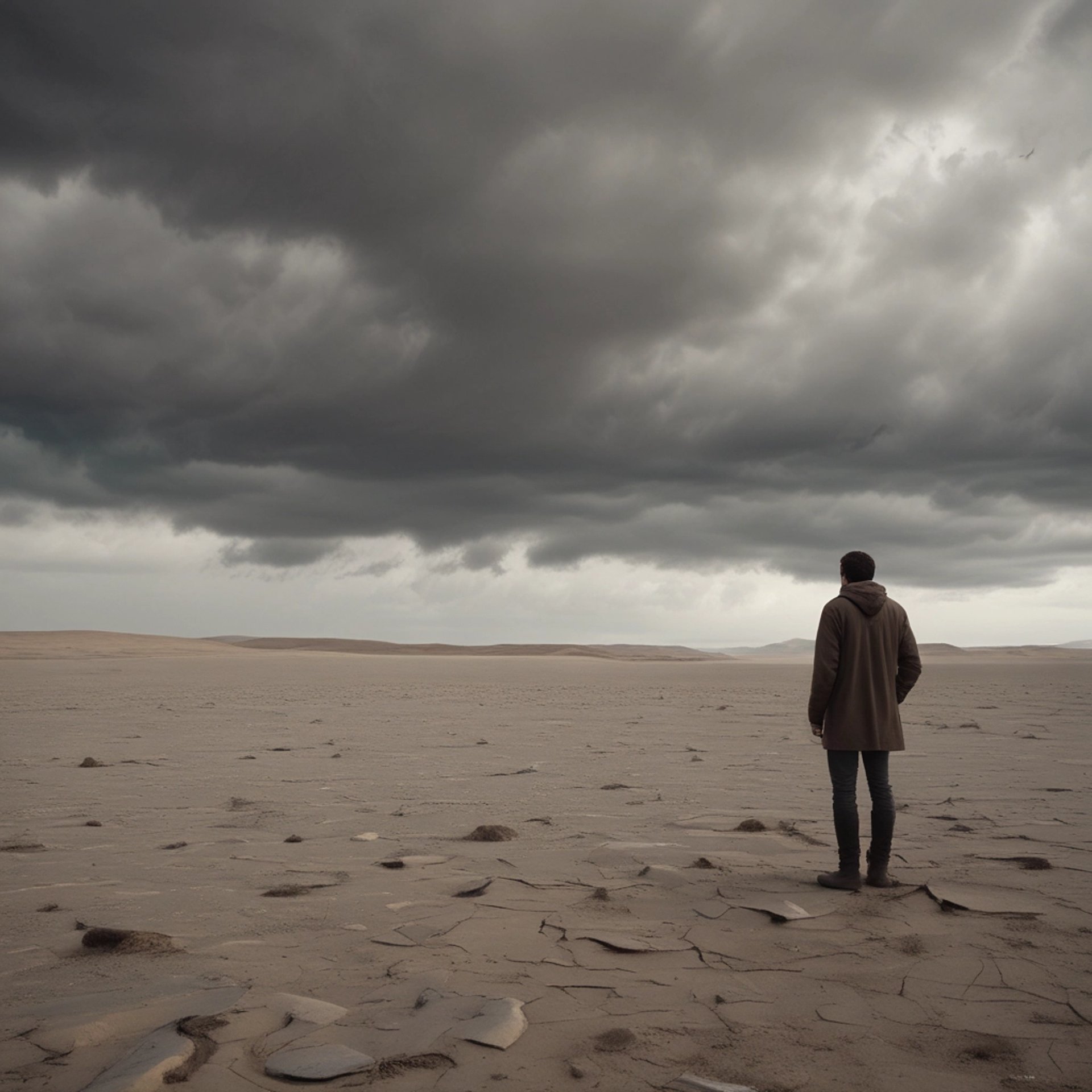
Lone person standing in dry desert looking at cloudy sky.
You are praying, but the words seem to bounce off the ceiling. You are reading, but the pages feel empty. If you feel spiritually numb right now, you are not alone—and you are not abandoned.
It starts subtly.
Maybe it’s a distraction during Sunday worship that turns into apathy. Maybe your morning prayer time, once a source of comfort, begins to feel like talking to a brick wall. You open your Bible, hoping for a fresh word, but the ink on the page feels just like that—ink on a page.
There is an ancient, visceral description of this feeling found in Deuteronomy: “The sky over your head will be bronze, and the ground beneath you iron.”
When the heavens feel like brass—hard, impenetrable, and silent—it is terrifying for a believer. We are taught that the Christian life is a relationship. So, when the other side of that relationship goes quiet, the panic sets in.
The internal monologue begins: Is God angry with me? Is there unconfessed sin blocking my prayers? Have I lost my salvation? Am I just making all of this up?
If you are currently walking through a spiritual desert, I need you to hear something before you read another word: You are not crazy. You are not alone. And this season does not mean God has abandoned you.
Spiritual dryness is painful, but it is also a normal, inevitable, and—dare I say it—necessary part of a deepening faith.
Here is how to navigate the season when God feels silent.
1. Validate the Silence (You Are in Good Company)
The greatest trick the enemy plays during a dry season is isolation. He convinces you that everyone else in your church is experiencing vibrant, Technicolor encounters with the Holy Spirit while you are stuck in sepia tones.
This is a lie.
If you open your Bible, you will find that the greatest heroes of the faith spent significant time in the desert.
David, a "man after God's own heart," penned agonizing cries in the Psalms: "How long, O Lord? Will you forget me forever? How long will you hide your face from me?" (Psalm 13:1).
Elijah, right after his greatest victory on Mount Carmel, fell into a deep depression in the wilderness, begging God to take his life because he felt so alone.
Even Jesus, on the cross, cried out, "My God, my God, why have you forsaken me?"
If David, Elijah, and Jesus experienced the crushing weight of God's apparent absence, who are we to think we are exempt? Acknowledging the dryness isn’t a lack of faith; it’s biblical honesty.


The Danger of "Feelings-Based Faith"
We live in a culture obsessed with experience. We judge the reality of something by how it makes us feel.
The danger for the modern Christian is equating the feeling of God’s presence with the reality of God’s presence. When the spiritual "goosebumps" fade, we assume God has left the building.
But feelings are terrible barometers of truth. They fluctuate based on how much sleep you got, what you ate for lunch, your hormones, or your stress levels at work.
When pilots fly into thick clouds, they experience spatial disorientation. Their sensory perceptions tell them they are flying level when they might actually be in a dangerous dive. To survive, the pilot must ignore their feelings and trust their instruments.
Spiritual dryness is flying in the clouds. Your feelings tell you that you are alone. Your "instruments"—the objective truth of Scripture—tell you something else entirely: "I will never leave you nor forsake you" (Hebrews 13:5).
Maturity is learning to trust the instruments over the feelings.
3. Winter is Not Death
When we hit a dry patch, it feels like something has died. But perhaps it hasn't died; perhaps it's just winter.
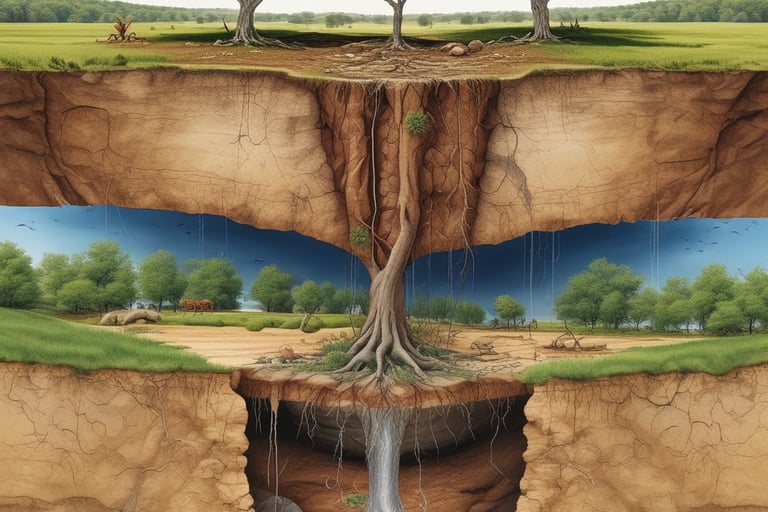
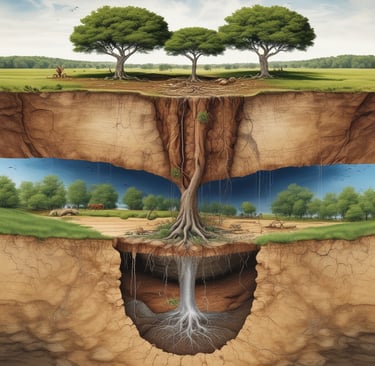
In winter, a tree looks dead. Its branches are bare, its sap has stopped flowing, and it produces no fruit. Yet, deep underground, something crucial is happening. Because resources are scarce on the surface, the tree’s roots are forced to dive deeper into the soil to find water.
Spiritual summer—when faith is easy and fruit is abundant—is wonderful. But we grow very shallow roots in summer.
The winters of the soul are when God forces our roots downward, past the superficial emotions and into the bedrock of His character. We learn that He is good even when we don't feel good. We learn to obey because He is Lord, not just because we want a blessing.
The dryness isn't a punishment; it's root-growing season.
A Survival Guide for the Desert
If you are in the thick of it right now, standard Christian advice can feel overwhelming. "Read more and pray harder" feels impossible when you have no energy.
So, lower the bar. Here is a low-pressure survival guide for the desert:
Show Up Empty: God doesn't need you to pretend you are happy. He can handle your numbness. Go to church, sit in the back row, and just exist in His space. You don’t have to "feel it" for it to count.
Borrow Prayers: When your own words feel hollow, use the words God gave us. Read a Psalm of lament out loud. Let David’s frustration be your prayer.
Do the Next Right Thing: When you can’t see the big picture, just focus on the next five minutes. What is the next obedient thing? Washing the dishes? Sending that email? Loving your spouse? Obedience when you don’t feel like it is a profound act of worship.
The Rain Will Return
This season feels eternal, but it is temporary. The seasons always change.
If the heavens feel like brass today, keep showing up. Keep trusting your instruments over your feelings. Your roots are growing deeper than you know, and the rain is eventually coming.
How about you? Have you experienced a season of spiritual dryness? What helped you navigate it? Let’s encourage each other in the comments below.